
For nearly four years, the home improvement industry has been operating against a stubborn headwind: a housing market locked up by elevated mortgage rates, climbing prices, and buyers who simply can’t make the math work. The first quarter of 2026 brought the first quiet sign that the squeeze might be easing.
According to the NAHB/Wells Fargo Cost of Housing Index, a family earning the national median income of $106,800 needed 32% of that income to cover the mortgage on a median-priced new home in Q1 2026—down from 34% the previous quarter. The share fell by the same two points for existing homes, and low-income families saw their burden drop from 67–69% to 65%.
It’s not a turnaround. It’s a flicker. But for hardware and home improvement retailers, even a flicker is worth reading carefully.
What’s Actually Driving the Improvement
Two things shifted in Q1. Mortgage rates ticked down slightly, from 6.32% to 6.20% on the average 30-year, and home prices softened. New home median prices dipped from $405,300 to $403,200. Existing home prices fell harder, dropping 2.6% to $404,300 from $414,900 the prior quarter.
That last number is the one to underline. Existing home sellers cut prices to attract buyers in an uncertain economy, while builders kept pushing toward smaller, less expensive homes. The result is one of the more unusual data points in recent housing history: the median price of a new home and a median existing home are now essentially identical. A year ago, existing homes sold for 5% more than new ones.
For an industry whose fortunes ride on what happens after a sale closes, that convergence matters.
What It Means for the Industry
The “stuck in place” customer is still the main customer
Affordability improved, but 32% of median income on a mortgage payment is right at the threshold the federal government uses to define a household as “cost-burdened.” Low-income families are still well into severe cost-burden territory at 65%. Translation: most people who weren’t moving last quarter still aren’t moving this quarter.
That’s the bedrock fact shaping demand. The homeowner sitting on a 3% mortgage from 2020 is not trading it for a 6.2% rate just because affordability ticked up half a percent. Instead, that homeowner is making the kitchen work, fixing the roof, replacing the appliances, and painting the bedroom. The renovation and repair economy continues to be the industry’s center of gravity, and nothing in this report changes that.
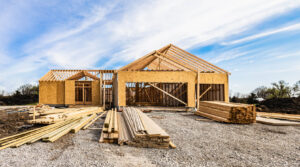
Smaller, cheaper new builds = a different project basket
The shift in new construction toward smaller, less expensive homes has quiet but real implications for product mix. Builders pushing to a price point are specifying tighter footprints, simpler finishes, and fewer luxury upgrades. The owner who moves into that home becomes a great DIY customer over time, they’re more likely to personalize, upgrade, and add what the builder left out.
That’s an opportunity. Stock the categories that turn a builder-grade house into a home: smart thermostats, upgraded light fixtures, paint and accent walls, organization systems for tight closets, compact outdoor living solutions, and storage that maximizes a smaller footprint.
The market is fragmented — local conditions still rule
The national average masks enormous variation. In 7 of 175 metropolitan markets, the typical family is severely cost-burdened, paying more than 50% of income for housing. In 59 more, they’re cost-burdened (31–50%). But in 109 markets, the cost of housing sits at 30% or below.
That spread is a reminder that “the market” doesn’t exist as a single thing for independent retailers. A store in a 109-market city is in a fundamentally different demand environment than one in a 7-market metro. Tracking the local picture matters more than tracking the national one — and the local picture is where independents have a structural advantage over the big boxes.
Modest tailwind, not a recovery
Two percentage points of affordability improvement, on the back of a 12 basis-point rate cut and a small price decline, is not the start of a boom. It’s a thaw at the edges. If rates continue inching down through 2026, and price moderation continues, the housing transaction volume could begin to recover—and that would eventually translate into the move-in project surge (paint, blinds, basic tools, hardware, fixtures) that the industry has been waiting on.
But “eventually” is doing a lot of work in that sentence. NAHB itself flagged that buyers are still grappling with elevated rates and economic uncertainty, while builders contend with rising construction costs, regulations, and labor shortages. The supply-side problems aren’t going away, and the demand-side problems are only marginally less acute than they were six months ago.
The Takeaway
The Q1 affordability data is a real but small piece of good news in a stretch that’s offered very little of it. For hardware and home improvement retailers, the strategic posture shouldn’t change much: the renovation and maintenance customer remains the bread and butter, and that’s likely to be true for several more quarters. But the early signals worth watching are starting to appear and any retailer paying attention now will be better positioned when the housing market actually starts to move.
The thaw doesn’t fill the parking lot yet. It just means the door isn’t frozen shut anymore.
Source: NAHB/Wells Fargo Cost of Housing Index, Q1 2026.